
Buying an off-plan home in Türkiye as a foreigner: the 2026 guide
Who can buy, what limits apply, which rules protect off-plan buyers, how the process works step by step, what it costs, and where citizenship and residence fit in. A comprehensive guide based on official sources as of October 2026.
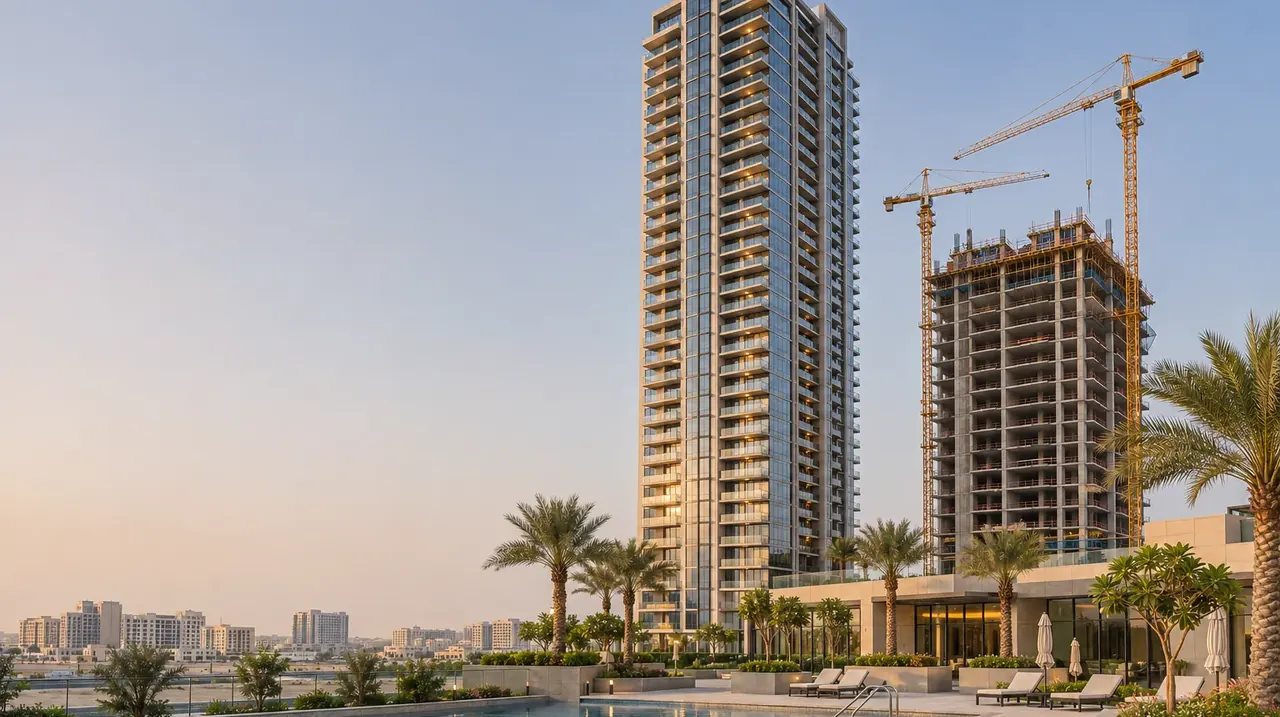
For a foreign buyer, purchasing an off-plan home in Türkiye is both an opportunity and a responsibility. It is an opportunity because the launch price usually gives way to higher prices as construction advances, and instalment plans make it possible to invest without tying up a large sum at once. It is a responsibility because, when you buy a building that has not yet risen, you place your trust in documents, in the developer's track record and in the legal rules that protect you.
This guide brings together everything a foreigner needs to know when buying off-plan in Türkiye: who can buy, what limits apply, which rules protect you, how the process unfolds step by step, what it will cost, and how citizenship and residence permits work. The information reflects official sources and legislation in force as of October 2026.
Can foreigners buy property in Türkiye?
Yes. Under Article 35 of the Land Registry Law, foreign individuals who are citizens of countries designated by the President may buy homes and land in Türkiye. A 2012 amendment replaced the old reciprocity principle with this country list, and today citizens of most of the world's countries hold this right. Restrictions may apply to citizens of certain countries, so the current practice of the General Directorate of Land Registry and Cadastre (TKGM) should be confirmed before any transaction.
Four main limits apply to property acquired by a foreigner:
- A foreign individual may acquire up to 30 hectares of property across Türkiye.
- The total property owned by foreigners in a district may not exceed 10% of the privately owned land in that district. This limit applies to the district as a whole, not to the individual.
- Property in military restricted zones and military security zones cannot be sold to foreigners. The land registry office checks the property's coordinates automatically during the application.
- The President may impose restrictions by country, region or period on grounds of public interest or security.
In practice, these limits rarely cause problems for home purchases; the great majority of residential developments in city centres and holiday regions are open to foreign buyers.
What buying off-plan means, and why buyers choose it
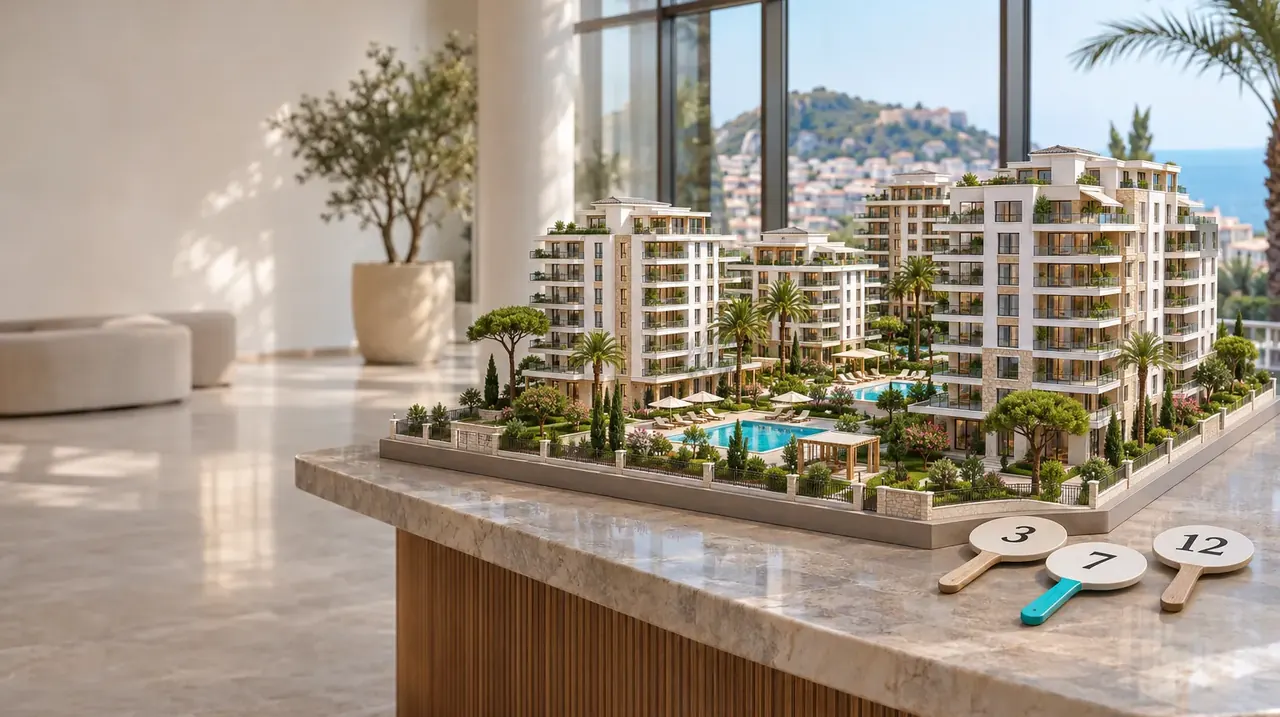
Buying off-plan means purchasing a unit in a building whose construction has not started or is still under way, on the basis of plans and visuals. Turkish law calls this a "prepaid housing sale" and subjects it to specific consumer protection rules.
Foreign buyers tend to choose off-plan for three reasons. The first is price: developers usually offer their lowest prices at launch, and prices rise in stages as construction progresses. The second is ease of payment: after a down payment, the balance can be paid in instalments spread over the construction period. The third is newness: the home is handed over brand new, built to the current earthquake code, with new shared facilities.
In return, the buyer takes on the risk of an unfinished building. What manages that risk is looking at the right documents and knowing the legal protections.
The rules that protect off-plan buyers
Prepaid housing sales are governed by Consumer Protection Law No. 6502 and the Ministry of Trade's Regulation on Prepaid Housing Sales. Foreign buyers benefit from these protections too. The key rules are:
- A prepaid sales contract cannot be signed for a project without a building permit.
- The buyer must receive a pre-contract information form at least one day before signing.
- The contract must be executed at the land registry office or before a notary. Payments taken without this formality do not make the contract valid.
- The contract must state the unit's block and parcel numbers, building and floor, net and gross area, the date of the building permit, the handover date and details of the guarantee.
- In projects with 30 or more units, the seller must provide a completion insurance, a bank letter of guarantee or a similar security before selling.
- The buyer may withdraw within 14 days of the contract without giving a reason or paying a penalty.
- The unit must be transferred or handed over within 36 months of the contract date at the latest.
- The buyer may terminate the contract within 24 months of signing; the compensation payable is graduated between 2% and 8% of the contract price depending on when termination occurs. If the seller has breached the contract, for example by delaying handover, the buyer may terminate without compensation.
For projects published on Eurasian Projects, the building permit, type of guarantee and handover schedule appear in the "Documents" section of the project page, and documents that have passed the platform's checks are marked separately.
The off-plan purchase process, step by step
- Check the project and the developer: review the building permit, the condominium-easement (kat irtifakı) status, the developer's previously delivered projects and the type of guarantee.
- Choose your unit: compare floor, aspect, net area and specifications on the plans, and ask which price stage applies.
- Obtain and read the pre-contract information form: the payment plan, handover date and what happens in the event of delay are set out there.
- Get a Turkish tax number: it can be issued the same day at any tax office on presentation of your passport.
- Open an account with a Turkish bank: this keeps payments traceable and allows a foreign currency purchase certificate to be issued.
- Sign the contract at the land registry office or before a notary: if you do not speak Turkish, a sworn translator must be present. If you cannot attend in person, you can appoint a representative with a power of attorney that has been apostilled or issued at a Turkish consulate.
- Make payments according to the contract's plan: for payments in foreign currency, obtain a foreign currency purchase certificate from the bank, as it is requested at the title deed transaction.
- Complete the title transfer: if a condominium easement has been established, the title can be transferred while construction is still in progress; full condominium ownership (kat mülkiyeti) is established after the occupancy permit.
- Take delivery with a signed record: inspect the home with a checklist, report any defects in writing, take out the compulsory earthquake insurance (DASK) and transfer the electricity, water and gas subscriptions to your name.
Costs: what comes on top of the price?
In addition to the sale price, your budget should include:
- Title deed fee: 4% of the sale price; in practice 2% is charged to the buyer and 2% to the seller. The declared price may not be lower than the property's tax value.
- Land registry service charge (döner sermaye): a transaction fee set each year by the land registry.
- VAT: VAT applies to sales of new homes. An exemption may apply to the first delivery of a home to a foreigner not resident in Türkiye, provided the price is brought into Türkiye in foreign currency. At least half of the price must be paid by the invoice date and the remainder within one year. If the home is sold within three years, the VAT not collected is reclaimed with late payment interest.
- Sworn translator and notary fees.
- DASK and optional home insurance.
- Annual property tax, payable to the municipality where the home is located.
Citizenship and residence permits
Foreigners who acquire property worth at least USD 400,000 in Türkiye and register a three-year no-sale annotation on the title can apply for Turkish citizenship by investment. Since 12 December 2023, property acquired for citizenship must be an independent unit with a condominium easement or condominium ownership, or a building with an occupancy permit; vacant land and fields do not qualify. A valuation report and documents showing that the price was paid through the banking system are mandatory for citizenship purchases.
Homeowners can also obtain a short-term residence permit. For property acquired after 16 October 2023, this depends on the sale price recorded on the title deed being at least USD 200,000, calculated at the Central Bank's foreign exchange selling rate on the title deed date.
The market today
According to data published by TÜİK on 16 October 2026, 142,390 homes were sold across Türkiye in September 2026. Of these, 51,519 were first-hand sales, meaning homes changing hands for the first time, mostly from developers, and first-hand sales were up 3.9% on a year earlier. In the same month, 2,167 homes were sold to foreigners, a 9.9% increase on the same month of the previous year. Sales to foreigners between January and September reached 15,308 homes in total. In September, the largest foreign buyer groups were citizens of the Russian Federation (388), Iraq (166) and Germany (162).
On prices, the Central Bank's House Price Index rose 23% in nominal terms in August 2026 compared with a year earlier, while the inflation-adjusted change was a 6.5% fall. In other words, house prices have declined in real terms over the past year, a useful data point for long-term buyers weighing when to enter the market. Every investment decision should, of course, also consider the conditions of the specific area and project.
Common mistakes
- Paying a deposit without seeing the building permit.
- Signing the contract as a simple private agreement rather than at the land registry or a notary.
- Paying in cash or off the record, which jeopardises both the foreign currency purchase certificate and any possible VAT exemption.
- Failing to have the handover date and the terms applying in case of delay written into the contract.
- If citizenship is the goal, not checking before purchase whether the property meets the post-2023 conditions.
Frequently asked questions
Can foreigners buy off-plan homes in Türkiye? Yes. Citizens of countries designated by the President can buy homes in projects located outside military zones and within the legal area limits.
Is my money safe when buying off-plan? The law prohibits sales in projects without a building permit and requires guarantees such as completion insurance or a bank guarantee in projects with 30 or more units. Executing the contract at the land registry or a notary and paying through a bank are the foundations of your protection.
Can I change my mind after buying? You can withdraw within 14 days of the contract without reason or penalty. After that, within 24 months, you can terminate with compensation of between 2% and 8% of the contract price.
When do I receive the title deed? If a condominium easement has been established, the title can be transferred while construction is under way. If not, the transfer takes place once the easement or condominium ownership is established.
Can buying a home give me residence? For homes acquired after 16 October 2023, you can apply for a short-term residence permit if the sale price on the title deed is at least USD 200,000.
Can I buy without living in Türkiye? Yes. A representative appointed by power of attorney can handle the land registry and bank procedures on your behalf.
Sources
- Land Registry Law No. 2644, Articles 35 and 36; practice of the General Directorate of Land Registry and Cadastre: tkgm.gov.tr
- Ministry of Trade, announcement on the Regulation on Prepaid Housing Sales (Official Gazette, 27.11.2014, No. 29188): https://ticaret.gov.tr/duyurular/on-odemeli-konut-satislari-hakkinda-yonetmelik-onemli-duzenlemeler-getiriyor
- Consumer Protection Law No. 6502, Articles 40 to 46 (prepaid housing sales)
- VAT Law No. 3065, Article 13/i
- Regulation on the Implementation of the Turkish Citizenship Law, Article 20 (citizenship by investment)
- Presidency of Migration Management, short-term residence permits based on property ownership
- TÜİK, House and Commercial Property Sales Statistics, September 2026 (16 October 2026): data.tuik.gov.tr
- Central Bank of the Republic of Türkiye, House Price Index, August 2026: evds2.tcmb.gov.tr
This guide is for general information only and does not constitute legal advice. As legislation and practice may change, we recommend obtaining up-to-date confirmation from the land registry office and a lawyer before purchasing.